Woodland Garden Restoration & Groundcover Planting
Turning an overgrown woodland edge into a layered, low-maintenance garden in Biddeford Pools.
Project Details
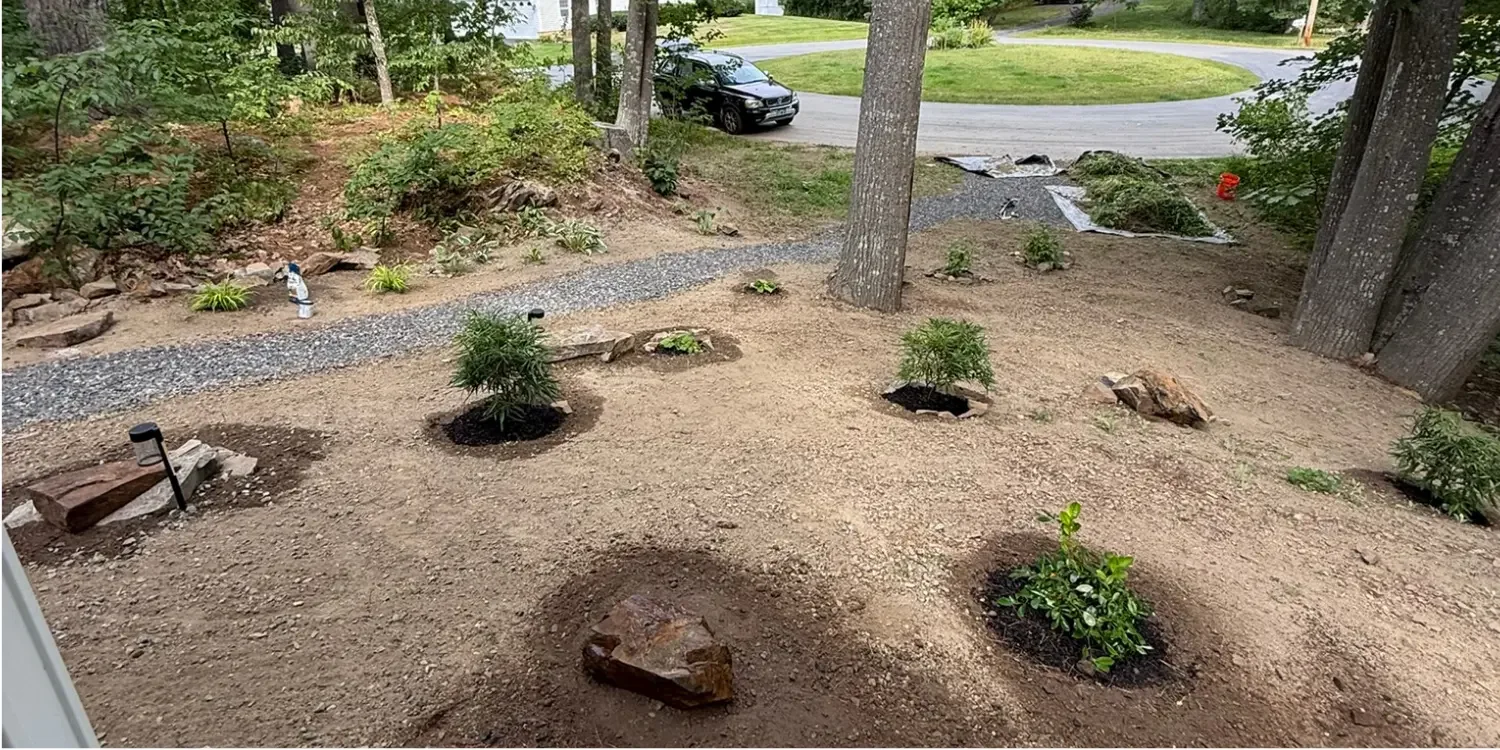
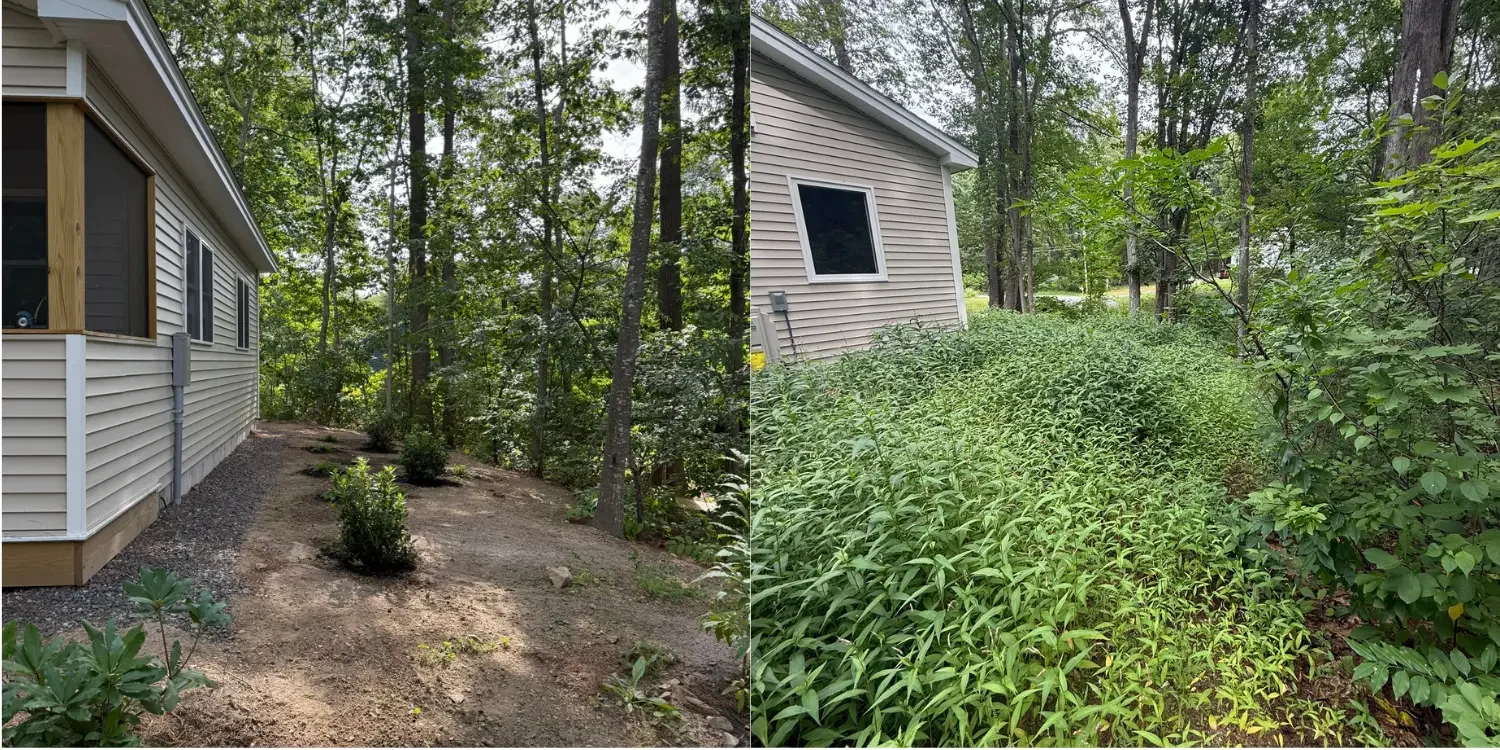
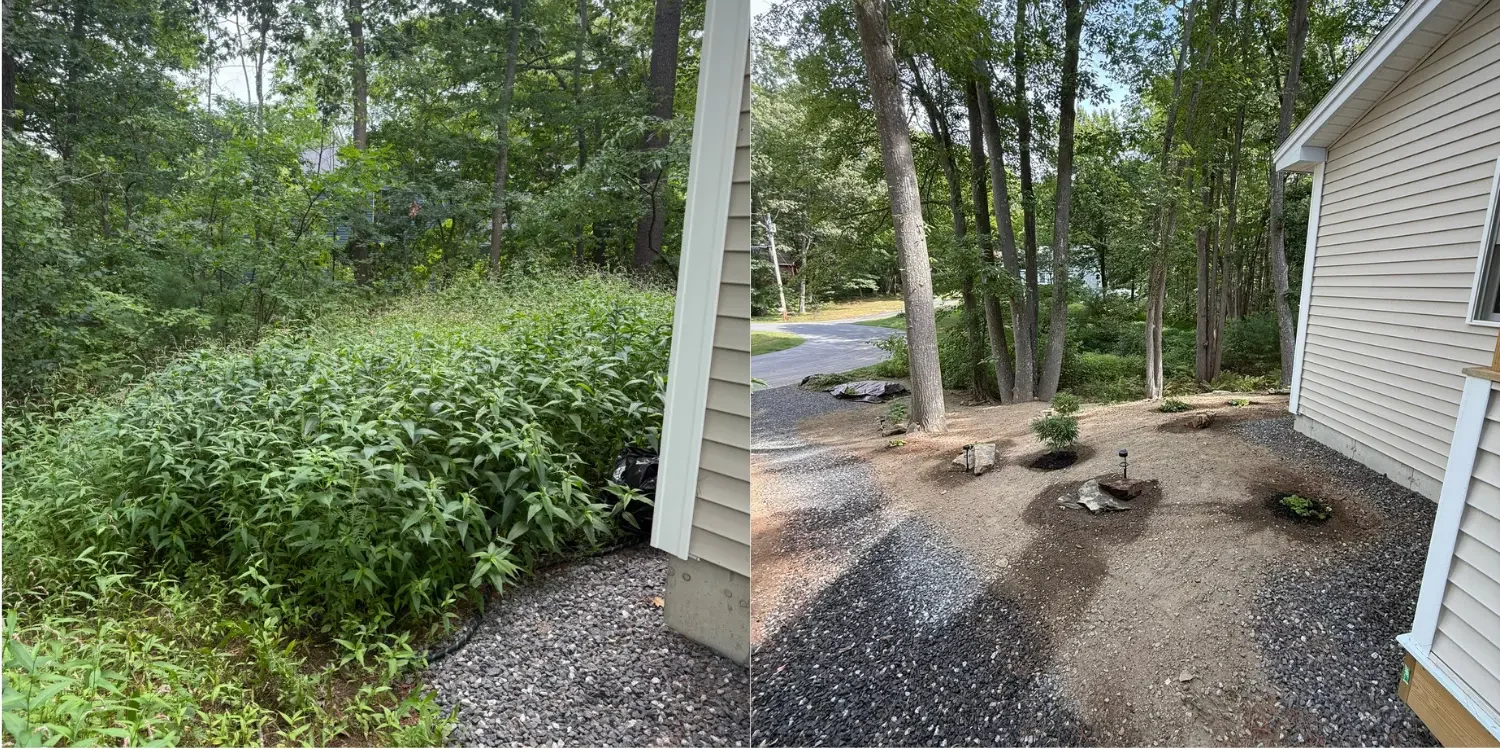
This project began around a newly constructed cottage in Biddeford Pools surrounded by mature trees and filtered woodland light. Large areas of disturbed soil had become heavily colonized by Lady’s Thumb and other opportunistic weeds, leaving the property feeling unfinished and creating an ongoing maintenance problem.
Rather than repeatedly clearing the area and leaving exposed soil behind, the goal was to establish plants that could gradually occupy the space themselves.
The initial plan called for removing the existing Lady’s Thumb by the root while minimizing soil disturbance and avoiding tilling, which could bring additional buried weed seed to the surface. Follow-up visits were also planned to address new seedlings and regrowth.
From there, the property was approached as two related but distinct planting areas: a sloped woodland edge requiring structure and erosion control, and a shaded area around the house where massed groundcovers could form a living woodland carpet.
Stabilizing the Woodland Slope
The road-facing hillside needed more than groundcover.
Because of the grade, we wanted plants with enough woody structure and root mass to visually anchor the slope while also helping stabilize the soil. The planting incorporated clethra, low-growing aronia, and sweet fern in repeating groups across the hillside.
Together, these shrubs create different heights and textures without introducing the formality of a traditional foundation planting.
Clethra provides stronger upright structure and summer flowers, while lower aronia spreads closer to the ground. Sweet fern introduces a looser, distinctly woodland character and helps connect the planting visually to the surrounding native landscape.
As these plants mature, their root systems and spreading habits will increasingly help hold the slope, cover exposed soil, and reduce the amount of open ground available for weeds.
Building a Woodland Floor Rather Than a Flower Bed
Around the house, the approach was intentionally different. Instead of planting isolated specimens surrounded by mulch, we created a mass woodland planting designed to knit together over time.
The palette included:
Pennsylvania sedge • foamflower • sweet woodruff • ghost fern
These were planted in larger repeating groups so that their foliage can eventually overlap and create a continuous layer across the woodland floor.
Pennsylvania sedge provides a soft, grass-like texture and is particularly useful in shaded woodland conditions. The original proposal specifically identified it as a spreading groundcover capable of helping stabilize and cover soil.
Foamflower adds a slightly taller layer along with delicate spring flowers, while sweet woodruff spreads closer to the soil surface and helps fill the spaces between slower-establishing plants. The proposal anticipated using species with different growth rates so faster-spreading plants could cover exposed soil while the rest of the planting became established.
Ghost ferns introduce another height and texture, with their upright fronds giving definition to the mass planting without making the woodland floor feel formal.
Plants Doing the Work
A central idea behind this garden was to reduce dependence on repeated mulch applications and constant hand-weeding.
By using sedges, spreading perennials, ferns, and low shrubs in masses rather than as individual accents, the garden is intended to gradually shade the soil and occupy the same ecological space that weeds would otherwise fill.
The original proposal described this same objective: creating a layered woodland planting that would cover exposed soil, suppress future weed growth, and develop into a more stable, lower-maintenance garden over time.
This means the garden will look different several years from now than it did immediately after installation—and that is intentional.
The goal is for plants to spread.
Designed for Filtered Light and Shade
The mature tree canopy was treated as an asset rather than something the garden needed to overcome.
Instead of forcing sun-loving ornamental plants into difficult conditions, the planting palette responds to the filtered light and shade already present on the property.
Native-Forward, Not Overly Formal
The project places a strong emphasis on plants suited to woodland conditions, including several native species.
At the same time, the primary goal was creating a resilient plant community rather than adhering rigidly to a single aesthetic.
The planting combines native shrubs and woodland plants with other reliable shade groundcovers to create a garden that feels natural, functions well, and becomes easier to care for as it establishes.
Instead of rows or isolated specimen plants, repetition and massing create the design.
A Garden Designed to Fill In
Like many of our projects, this garden was not designed around how it looked on installation day.
It was designed around what happens next.
Over time, the sedges will expand, foamflowers and groundcovers will knit together, ferns will create larger drifts, and the hillside shrubs will develop into stronger masses.
As that happens, exposed soil should become less prominent and the garden should require less intervention to maintain its character.
What began as a weed-dominated woodland edge is being replaced by something more stable: a layered garden where the plants themselves become part of the long-term weed and erosion management strategy.
The goal is not to constantly maintain an empty space between plants—it is to let the garden gradually become the groundcover.