Garden Plantings for a Historic Library in Saco, Maine
Bringing new life and seasonal color to a traditional property
Project Details
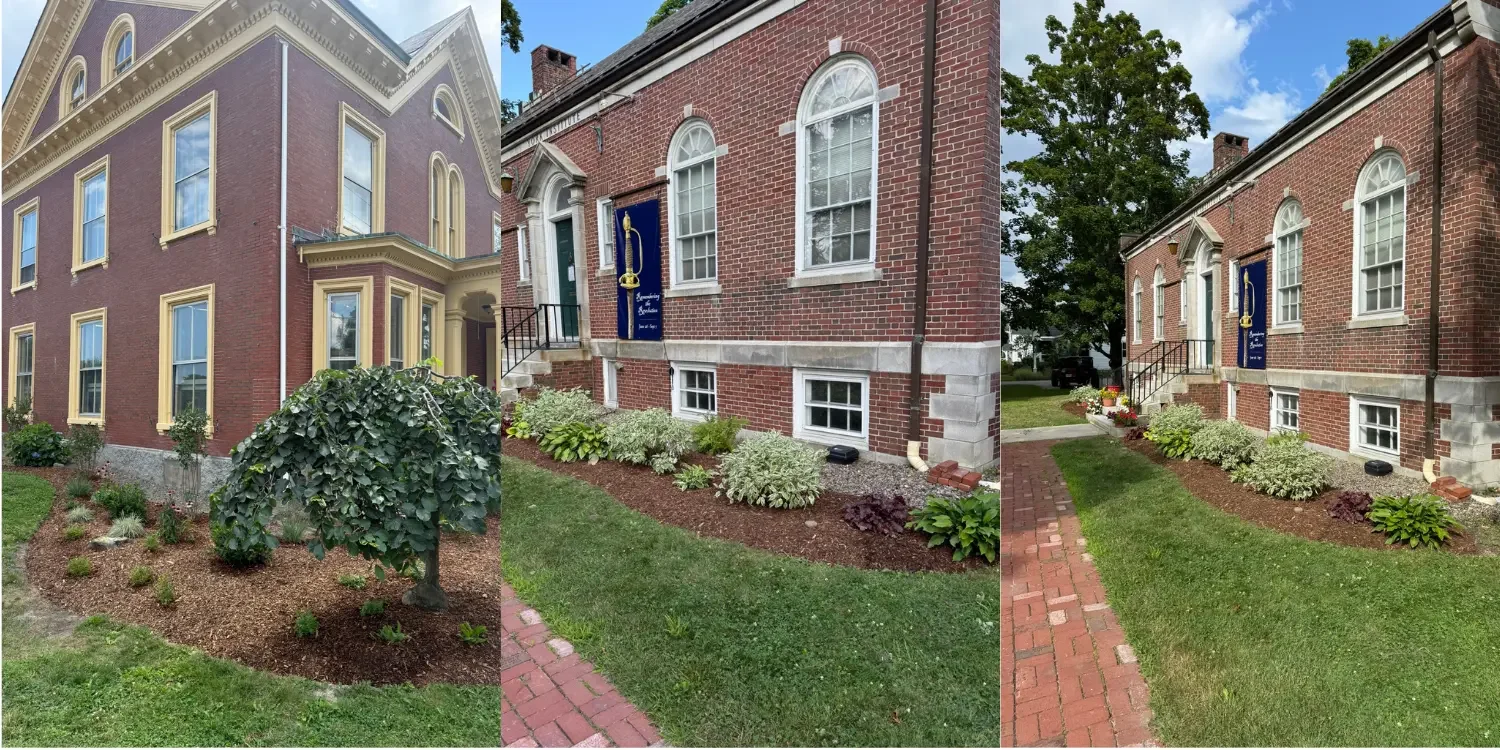
This Saco property includes both a historic library and museum surrounded by mature, traditional landscaping. Over time, several of the older evergreen foundation plantings had become oversized and no longer suited the scale or character of the spaces around them.
The goal was not to make the property feel modern or disconnected from its history. Instead, we wanted to introduce livelier, more layered plantings that would complement the brick and traditional architecture while bringing more color, texture, movement, and seasonal interest to the grounds.
Two different gardens were created—one at the museum entrance and another at the library—each designed for its particular setting and purpose.
Refreshing the Museum Foundation Planting
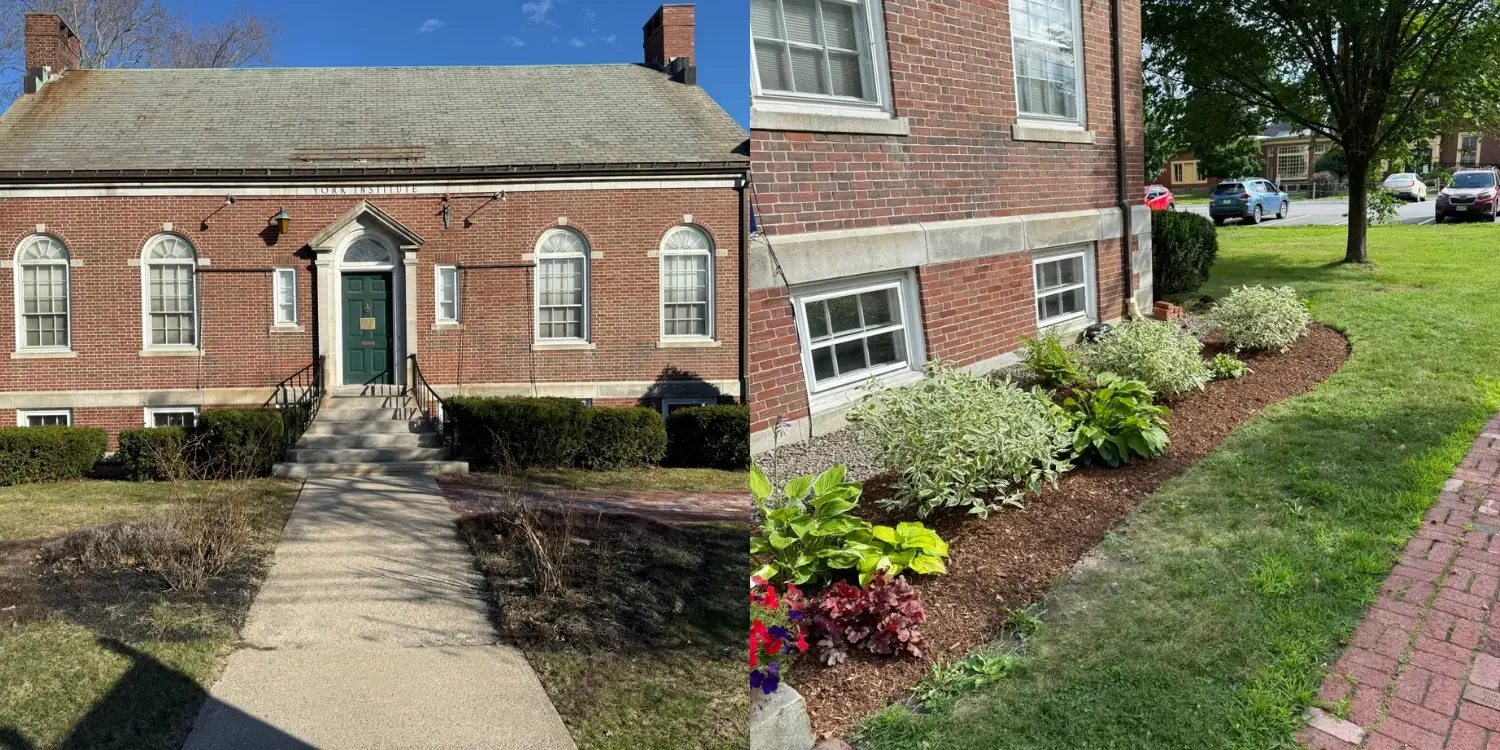
At the museum, mature evergreens along the front of the building had outgrown their role in the landscape. Their size and density obscured portions of the architecture and created a heavy appearance against the brick façade.
The existing evergreens were removed and replaced with a softer, more colorful planting designed to contrast with the building while still feeling appropriate for a historic property.
Ivory Halo dogwood forms the backbone of the new garden. Its green-and-white variegated foliage provides brightness throughout the growing season and creates a strong visual contrast against the warm brick of the museum.
Beneath and around the dogwoods, we layered hostas, astilbes, and coral bells, combining different leaf shapes, colors, and flowering periods.Rather than relying on a single evergreen mass, the new planting uses foliage and seasonal change to create interest.
As the garden matures, the dogwoods will provide height and structure while the lower perennials fill the spaces beneath them, creating a softer transition between the building and the surrounding grounds.
A Native-Focused Memorial Garden at the Library
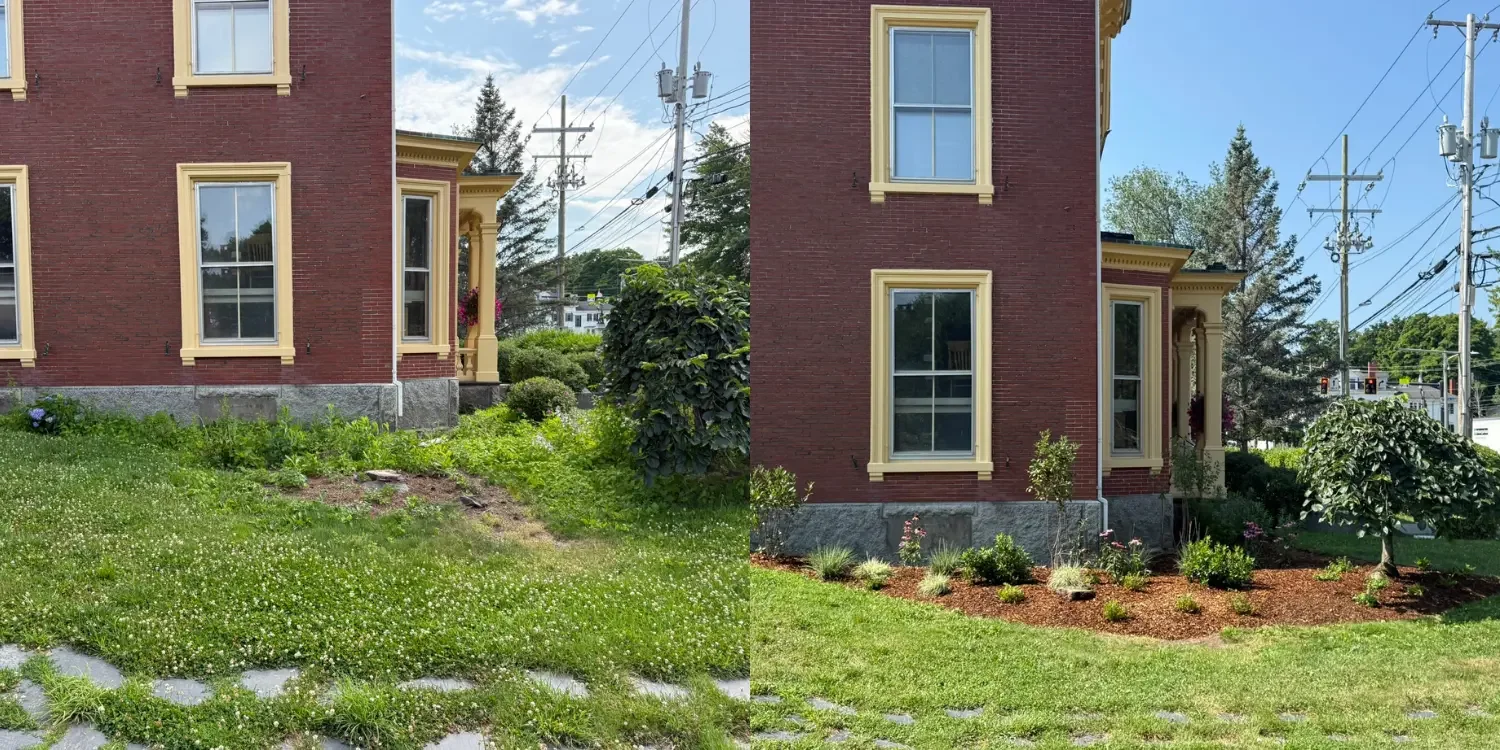
The library planting had a very different purpose. An overgrown area of the property was reclaimed to create a new garden in recognition of a longtime employee’s years of service.
For this space, we wanted the garden to feel natural, welcoming, and connected to Maine’s landscape. The planting therefore places a stronger emphasis on native and wildlife-supporting plants while still providing a clear garden structure.
At the back of the bed, Aronia or chokecherry provides a taller shrub layer and frames the planting.
‘Hummingbird’ summersweet (Clethra), bluestem grass, and coneflower create the middle layer of the garden. These plants bring together summer flowers, movement, foliage texture, and changing seasonal color. Lowbush blueberry defines portions of the front edge, keeping the border lower and allowing views into the taller planting behind it.
A separate section of the garden was reserved for moisture-loving native plants, including swamp milkweed and Joe-Pye weed. Together, they add height and late-season flowers while providing valuable resources for pollinators.
Designed as a Garden That Changes Through the Seasons
Both plantings were designed around the idea that a garden should offer more than one moment of interest.
At the museum, variegated dogwood foliage and colorful perennial leaves provide texture even when the garden is not in bloom. Astilbe, hosta, and coral bells take turns adding flowers and foliage interest throughout the season.
At the library, flowers from summersweet, coneflower, milkweed, and Joe-Pye weed are complemented by ornamental grasses, berries, fall foliage, and the branching structure of the shrubs.
The gardens will continue to become more layered as they mature.
Two Gardens, Two Purposes
Although the museum and library share the same property, we intentionally approached the two plantings differently.
The museum garden is more architectural—using variegated foliage, shade perennials, and layered textures to brighten and soften the historic brick building.
The library garden is more naturalistic and native-focused, created as a living recognition of service while providing flowers, berries, habitat, and seasonal change.
The goal was not to erase the character of the landscape, but to help it evolve—one garden at a time.